Unveiling the Fascinating World of Satellites: 15 Amazing Facts
June 9, 2023 Category: Satellite Communications
Satellites have become an integral part of our modern world, facilitating communication, navigation, weather forecasting, and much more. Behind their capabilities in enabling global connectivity and unrivaled insights into the mysteries of space lie remarkable facts that will leave you amazed.
#1 Satellite Lifespan: A Decade of Service
Satellites typically have a working life of 10 to 15 years, during which they provide critical services like communication, weather monitoring, and more.
#2 Space Fuel Conservation: The Dance of Orbit
Once a satellites reaches its designated orbit, it can maintain its position without consuming fuel. However, lower satellites experience atmospheric drag over time, requiring occasional fuel boosts to remain in their position.
#3 Farewell, Low Satellites
Low satellites with altitudes below 1,000 km are intentionally de-orbited when they cease to function. They reenter the Earth’s atmosphere, burning up in the process.
#4 Geo Satellites: Celestial Illusionists
Geostationary Orbit (GEO) satellites orbit the equator at the same speed as the Earth’s rotation, making them appear stationary in the sky. They create the illusion of being fixed in one position.
#5 Leo Satellites: Speed Demons in the Sky
Low Earth Orbit (LEO) satellites orbit the Earth at a staggering speed of 28,000 km/h.
#6 he Mighty ISS: Humanity’s Orbital Oasis
The International Space Station (ISS) holds the distinction of being the largest satellite, measuring a whopping 109 meters in length.
Permanently inhabited by a crew of 6 individuals, the station serves as a remarkable feat of human engineering and international collaboration. Every 6 months, the crew members are rotated, ensuring a continuous human presence in space and fostering groundbreaking research across various fields.
The construction and maintenance of the ISS have come at a significant cost, with the total expenditure exceeding a staggering $150 billion, making it one of the most ambitious and expensive projects in human history.
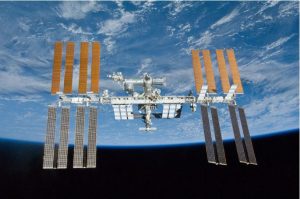 Figure 1: International Space Station (ISS)
#7 GPS: 27 Satellites Guiding Our Way
The Global Positioning System (GPS) relies on a network of 27 satellites to provide accurate positioning and navigation services across the globe.

Figure 2: GPS Satellite
#8 Sputnik 1: The Trailblazer
The first man-made satellite, Sputnik 1, was launched into orbit by the USSR in 1957. Sputnik 1 was a little larger than a football and took about 98 minutes to orbit the Earth. The word ‘Sputnik’ means fellow traveler.
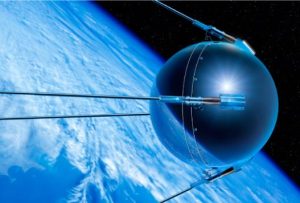
Figure 3: Sputnik 1
#9 Vanguard-1: The Timeless Wanderer
Vanguard-1 holds the title of the oldest man-made satellite still in orbit, having been launched in 1958. It continues to circle the Earth, even after all these years.
#10 Graveyard Orbit: Resting Place for GEO Satellites
GEO satellites which are situated at an altitude of 36,000 km maneuver into a “Graveyard Orbit” at the end of their lives. This ensures that they remain out of the way of operational satellites.

Figure 4: Graveyard Orbit
#11 The Resurrected Satellite: LES1’s Surprising Return
In a fascinating turn of events, LES1, a satellite abandoned in 1967, recently started transmitting again due to the decayed batteries unexpectedly shorting the solar energy straight to the electronics.
#12 Messages for the Future: Satellites as Time Capsules
Satellites orbiting Earth today are estimated to re-enter the atmosphere in approximately 8.4 million years, carrying messages from our present civilization to future generations.
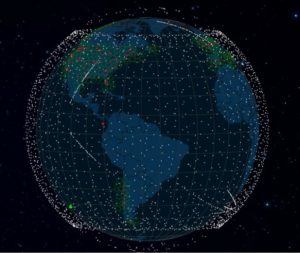
Figure 5: Current Starlink satellites across the globe
#13 Unveiling the Cosmos: Satellites with Mighty Telescopes
Some satellites like the James Webb Space Telescope (JWST) carry colossal telescopes to enable the observation of remote galaxies and exoplanets, offering glimpses billions of years into the past.
#14 Tom and Jerry: Satellites on a Gravity Mission
In 2002, 2 satellites nicknamed Tom and Jerry embarked on a groundbreaking mission to investigate Earth’s shifting water masses and map their effects on the planet’s gravity field. Through their data collection, Tom and Jerry contributed invaluable insights into the understanding of Earth’s hydrological cycle and its intricate relationship with gravity.
#15 Suitsat-1: An Unconventional Satellite Endeavor
In a unique and whimsical experiment, the Russian space agency launched Suitsat-1 in 2006. This extraordinary satellite was actually a discarded Russian Orlan spacesuit equipped with various electronics. Suitsat-1 ventured into space, broadcasting amateur radio signals and transmitting images from its onboard cameras. It floated freely, resembling a spacesuit on a spacewalk. Although Suitsat-1’s mission was short-lived and lasted for only a few weeks, it captured the imagination of space enthusiasts and served as a testament to the creativity and ingenuity within the realm of satellite technology.

Figure 6: Suitsat-1
From LEO satellites racing through the cosmos to the unconventional experiment of Suitsat-1, satellites continue to astound us with their capabilities and discoveries. However, the realm of satellites isn’t just limited to these awe-inspiring moments. It’s a dynamic industry that requires expertise and knowledge to navigate successfully. That’s where satellite communications training becomes crucial.
Stay Ahead of the Orbit: Supercharge Your Professional Growth with Telefocal Asia’s Satellite Training
At Telefocal Asia, we recognize the importance of equipping individuals with the necessary skills and expertise to excel in the field of satellite communications. Our comprehensive satellite communications training programs provide in-depth knowledge of satellite communications principles and applications, radio link planning and budgeting, and much more.
Whether you’re an aspiring professional looking to embark on a satellite communications career or an organization seeking to enhance your capabilities, our courses offer the knowledge and expertise you’ll need to navigate this exciting world of satellite communications
Together, let’s unlock the boundless possibilities that satellites offer and shape a future where connectivity knows no bounds.
Contact us today to find out how we can help you succeed.
References:
- NASA
- Satnow.com
- Cosmos Magazine
- Ttweathercenter.com
Follow us on LinkedIn to stay tuned to our weekly updates of the latest developments in the Telecom/IT industry and popular courses that we offer.
Share this on…